
AI-generated adult content can earn revenue when it is run as a repeatable creator business. That means building a recognizable brand, maintaining consistent production, choosing suitable distribution channels, creating worthwhile paid offers, retaining subscribers, and keeping the unit economics viable after costs.
A practical model looks like this:
- Build an original fictional adult persona or an authorized digital twin.
- Give that persona a defined audience and consistent identity.
- Validate demand with a small, controlled test.
- Turn production into a reusable content system.
- Give free previews and paid releases distinct roles.
- Select revenue channels based on their rules and economics.
- Track conversion, retention, refunds, labor, and generation costs.
- Expand when the results justify more production.
Think of it as a small media brand. Individual images and videos attract attention; the business develops when the right audience recognizes the persona, understands the offer, buys a specific product, and returns for later releases.
Stage 1: Choose an original persona or authorized digital twin
Start with one of two identity models:
- An original fictional persona: a new adult character with a distinctive appearance, personality, history, voice, and visual world.
- An authorized digital twin: a representation of a real adult who has given appropriate permission for their likeness and enabled formats to be used.
Avoid building the brand around an unauthorized copy of a celebrity, creator, acquaintance, or another real person. For a digital twin, document what the adult has authorized, including likeness, voice, promotional use, generated scenes, messaging, custom requests, and commercial distribution.
Mimisy’s OhChat AI persona explainer provides useful context for a platform model based on licensed digital twins. An original fictional persona works differently because the identity is created from scratch, though it still needs defined boundaries and consistent audience expectations.
Create a short persona sheet containing:
- Name, adult age, and a simple background
- Core personality traits and communication style
- Recognizable facial, hair, wardrobe, and color characteristics
- Recurring settings and themes
- Subjects the persona will and will not cover
- The distinction between public previews and paid material
- Rules for chat, commissions, and human escalation
“Attractive AI model” is too broad to guide a brand. A useful concept combines a specific aesthetic, personality, audience, and recurring release idea. A narrower concept is easier for viewers to remember and gives you clearer production criteria.
Stage 2: Define the audience and visual identity
Choose a segment with identifiable preferences instead of targeting everyone interested in adult content. The audience might be drawn to a particular fashion aesthetic, fantasy setting, character archetype, story format, or style of virtual companionship.
Then establish a compact visual system:
- Two or three primary colors
- A limited family of locations or backdrops
- Recurring wardrobe categories
- Consistent lighting and image treatment
- Standard portrait, full-body, teaser, and cover crops
- A caption voice readers can identify without seeing the account name
- Two or three repeatable content series
This keeps the feed from turning into a gallery of unrelated generations. Consistency allows variety while making every release feel as though it belongs to the same character and commercial world.
The persona’s promise should be equally clear. A subscriber needs to know whether the account focuses on polished visual sets, serialized stories, personalized interaction, frequent short videos, or another defined experience.

Recurring colors, wardrobe, settings, and crop formats make varied releases feel like one recognizable persona brand.
Validate demand before spending heavily
Use the first concept as a working hypothesis. Set a validation budget that covers generation credits, promotion, software, and your time. Decide beforehand what evidence will lead you to retain, revise, or stop the concept.
A lean validation process can work like this:
- Develop two or three variations of the same narrow persona concept.
- Produce a small set of safe-for-work teasers or previews permitted by the selected channel.
- Send each variation to a comparable audience or publishing slot.
- Offer one clear next action: join a waitlist, visit a profile, request launch information, or purchase a low-cost introductory release.
- Compare signals of purchase intent alongside engagement.
Useful signals include profile visits, waitlist registrations, paid conversions, repeat visits, meaningful messages, and requests for a related release. High engagement can still produce little commercial interest.
Define the test using your own variables:
- Maximum validation spend: V
- Minimum qualified visits or leads: Q
- Minimum paid conversions: P
- Maximum acquisition cost per payer: A
- Deadline for reaching the decision point: D
If a concept reaches D without meeting the chosen signals, adjust the positioning, offer, or distribution before buying a large volume of generation credits.
Stage 3: Build a reusable content-production system
A repeatable system improves consistency and helps each successful generation support more of the business. Build it around these assets:
- Persona reference sheet
- Approved source-photo library
- Visual rules and exclusion rules
- Reusable prompt modules
- Shot lists for each content format
- File and folder naming conventions
- A record of templates and settings that worked
- Selection criteria for publishable assets
- Release calendar and archive index
For an AI video workflow, Mimisy’s first-video guide covers the basic sequence: review an effect, upload a suitable source, check the settings and credit quote, and generate the result. Place each job within a larger production plan so it contributes to a finished release.
Source quality affects continuity. Follow the better-source-photo guidance: begin with sharp, evenly lit images, keep the subject visible, use suitable framing, and choose an original file over a compressed screenshot when available. Maintain a small approved library instead of bringing in a completely different reference for every release.
Use modular prompts for movement, expression, atmosphere, lighting, and camera behavior. Mimisy’s guide to optional prompts recommends short, focused instructions that remain compatible with the selected template. Change one meaningful variable at a time so you can tell what improved or weakened the result.
Curation matters as much as generation. Consuming credits does not make an asset publishable. Remove work with weak identity continuity, distracting artifacts, redundant framing, or little product value.
Turn one production session into a coherent library
Plan each session around one visual theme, such as a recurring setting, wardrobe palette, and narrative moment. A session might produce:
- One hero video for the paid release
- Several short teaser clips
- Still previews extracted or created in matching compositions
- Vertical, square, and landscape promotional crops
- An extended paid set
- A cover image and storefront thumbnail
- A persona-building post about the fictional setting or story
- Several scheduled archive promotions
- Editorial material for a blog, newsletter, or social post
All of these assets should lead back to one release. Use a naming structure that records the persona, series, release number, scene, version, and format. Organized files make it easier to locate sources, avoid duplicate publication, and calculate the actual production cost of each release.
A content library also gives older material new uses. A strong still can promote a video, a short clip can revive an earlier set, and a recurring series can continue without rebuilding the identity every week.

One coordinated production session supplies a consistent library of hero, teaser, still, crop, scheduling, and archive assets.
Stage 4: Separate free previews from paid products
Free content should establish the persona’s identity, demonstrate quality, and explain the offer. A viewer should be able to tell who the persona is, what the brand looks like, and what sort of release a purchase will unlock.
Paid content needs a meaningful extension. Package it around a recognizable theme, narrative, format, or named release. Give the product a clear title and description, specify the included formats, and make sure buyers can distinguish the full product from its previews.
Use AI-content labels wherever the selected platform requires them. Clear labeling also sets expectations about whether buyers are interacting with a fictional persona, an authorized digital twin, or a human creator offering services around generated media.
Stage 5: Compare six revenue models
Each model rewards different capabilities. Begin with one primary offer before attempting to run all six.
| Revenue model | What the buyer receives | Revenue pattern | Main operating demand | Scalability limit | Best fit |
|---|---|---|---|---|---|
| Subscriptions | Ongoing access to releases, archives, or community benefits | Recurring while subscribers remain | Reliable schedule and retention | Content and engagement expectations grow | Creators with a dependable pipeline |
| Pay-per-view bundles | A defined themed set or release | Irregular launch-based sales | Packaging and promotion for every release | Each bundle needs renewed demand | Creators with strong release concepts |
| Custom commissions | A permitted personalized asset or brief | Order-based | Scoping, communication, review, and fulfillment | Creator time and platform restrictions | Operators comfortable with controlled custom work |
| Licensed assets | Defined commercial or editorial usage rights | Per asset, collection, or agreement | Rights management and organized files | Demand for reusable, differentiated assets | Creators producing polished libraries |
| Affiliate or editorial traffic | Recommendations, guides, or referrals | Dependent on qualified traffic and program terms | Search content, disclosure, and audience trust | Traffic quality and program availability | Publishers with useful educational reach |
| Creator-service work | Persona design, production, editing, or campaign support | Project or retainer based | Client management and delivery | Team capacity and revision workload | Skilled operators serving other creators |
Keep custom commissions within the rules of the service being used. Before accepting orders, define the permitted request categories, revision limits, delivery format, response time, and refund handling.
Licensing needs especially clear terms. Specify what the buyer may use, where it may appear, how long the permission lasts, whether exclusivity applies, and whether modification or redistribution is allowed. Sell only the rights you control.
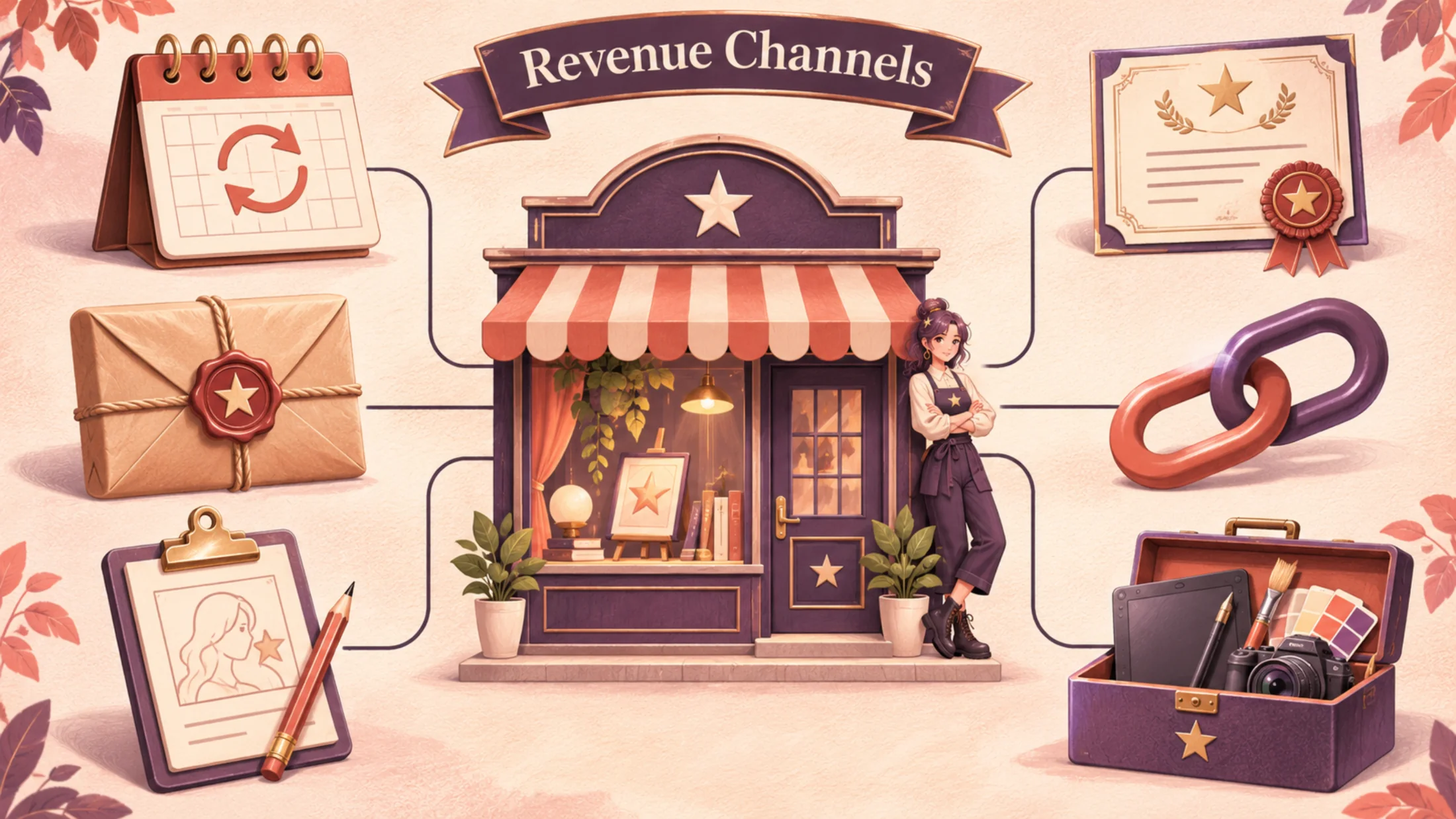
One creator brand can combine several distinct offers instead of relying on a single payment route.
Choose channels by rules, economics, and audience fit
Acceptance of AI adult content varies by platform. Before investing in channel-specific assets, check:
- Whether the intended content is permitted
- Whether AI disclosure or product labels are required
- Identity or business verification requirements
- Procedures for material based on a real person
- Available payout methods and geographic access
- Platform, payment-processing, and withdrawal costs
- Refund and chargeback handling
- Storefront discovery and promotional tools
- Messaging and subscription features
- Whether audience and customer data can be exported
- What happens to products if the account closes
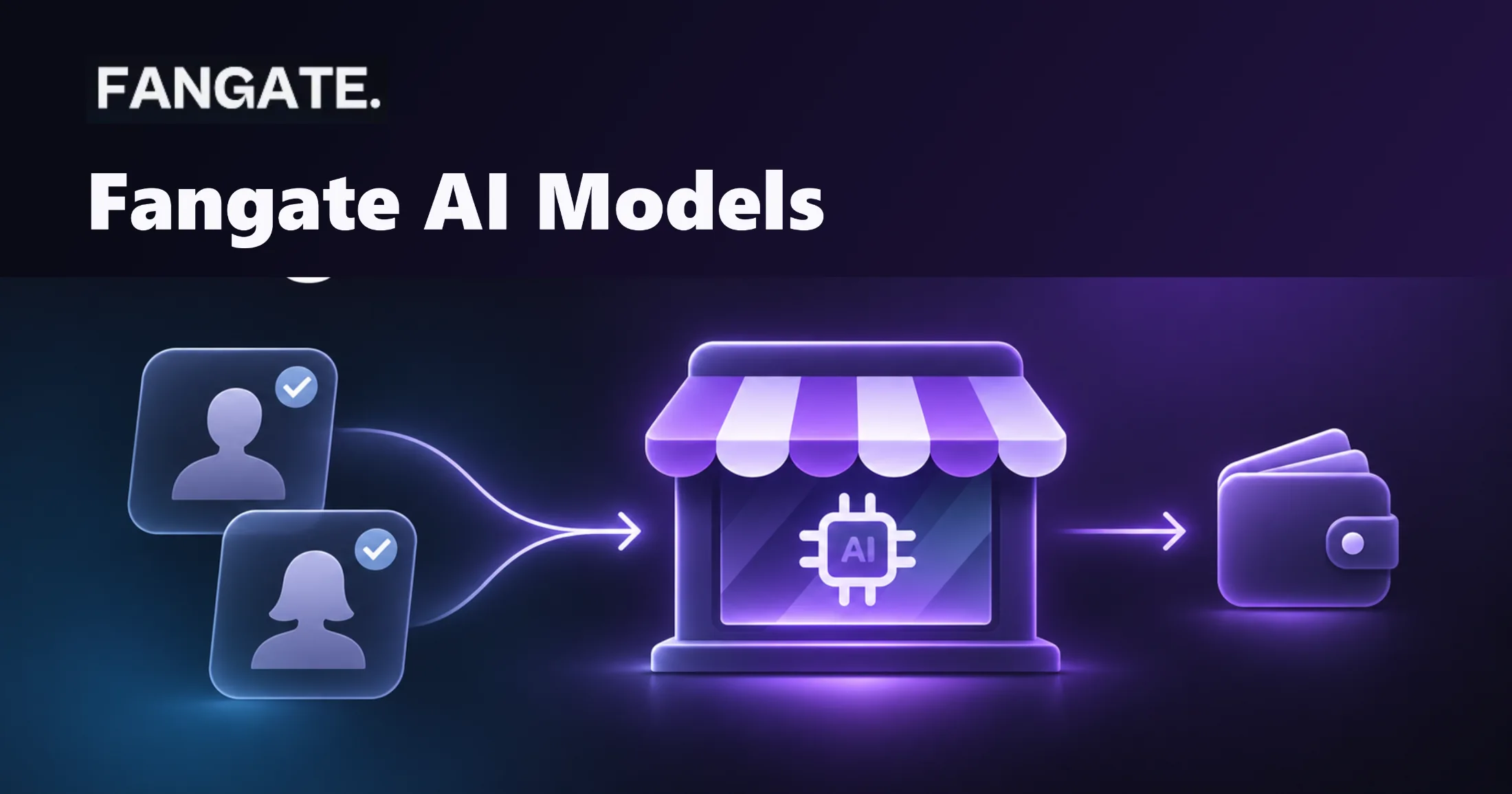
The Fangate AI Models explainer describes a documented path in which verified creators or agencies can operate fictional AI model profiles and sell labeled AI products through a controlling account. This is one specific platform structure; account approval and product sales still depend on the platform and the offer.
Mimisy’s Pornhub creator-program article also shows why upload eligibility, content labels, creator participation, and revenue options need to be checked separately. Approval or monetization on one service does not establish eligibility on another.
When evaluating a generation service, examine its privacy practices, media handling, deletion controls, payment mechanics, and product claims. Mimisy summarizes its approach on the Privacy & Safety page.
Stage 6: Build a sustainable publishing rhythm
A useful weekly calendar can be organized by function instead of a fixed post count:
- Public preview: introduces the current release theme.
- Paid release: delivers the main subscriber or bundle value.
- Persona post: develops the character’s voice, setting, or recurring story.
- Subscriber interaction: answers suitable questions and gathers preferences.
- Archive promotion: connects an earlier product to the current theme.
- Performance review: records sales, conversions, refunds, costs, and production time.
Batch production into focused sessions, then schedule the resulting assets across the week. Keep a buffer of finished, approved content so one failed generation session does not interrupt the publishing rhythm.
Chat can support retention, but it needs operating boundaries. Document the persona’s tone, expected response window, permitted subjects, and situations that require human review. Escalate payment disputes, sensitive conversations, unsupported factual claims, custom requests, and requests outside the persona’s limits to a human operator. A generated persona should be presented as generated rather than as a real human.
Calculate unit economics before scaling
Gross sales and net revenue answer different questions. Build a worksheet using your own figures rather than relying on headline income claims.
Gross sales
subscriptions + pay-per-view sales + commissions + licensing + affiliate revenue + service revenue
Net revenue
gross sales − platform fees − payment processing − refunds and chargebacks − promotion − generation credits − software − labor − contractor costs − applicable taxes
Contribution per paying customer
average collected revenue per payer − variable platform, payment, refund, generation, and fulfillment costs
Break-even paying customers
fixed monthly operating costs ÷ contribution per paying customer
For example, suppose R is the average collected revenue per payer and Cᵥ is the variable cost of serving that payer. Contribution equals R − Cᵥ. If fixed monthly operating costs are F, break-even volume equals F ÷ (R − Cᵥ). When contribution is zero or negative, customer growth will deepen the problem. The offer, pricing, fulfillment cost, or channel economics must change.
Measure generation cost against the assets that pass your publishing standard. If a batch costs G and produces N usable assets, then:
generation cost per publishable asset = G ÷ N
Mimisy shows the credit quote before a job, with totals varying according to the selected generation options. Use the current credits and payments guide and pricing page when estimating production costs instead of embedding plan figures that may change.
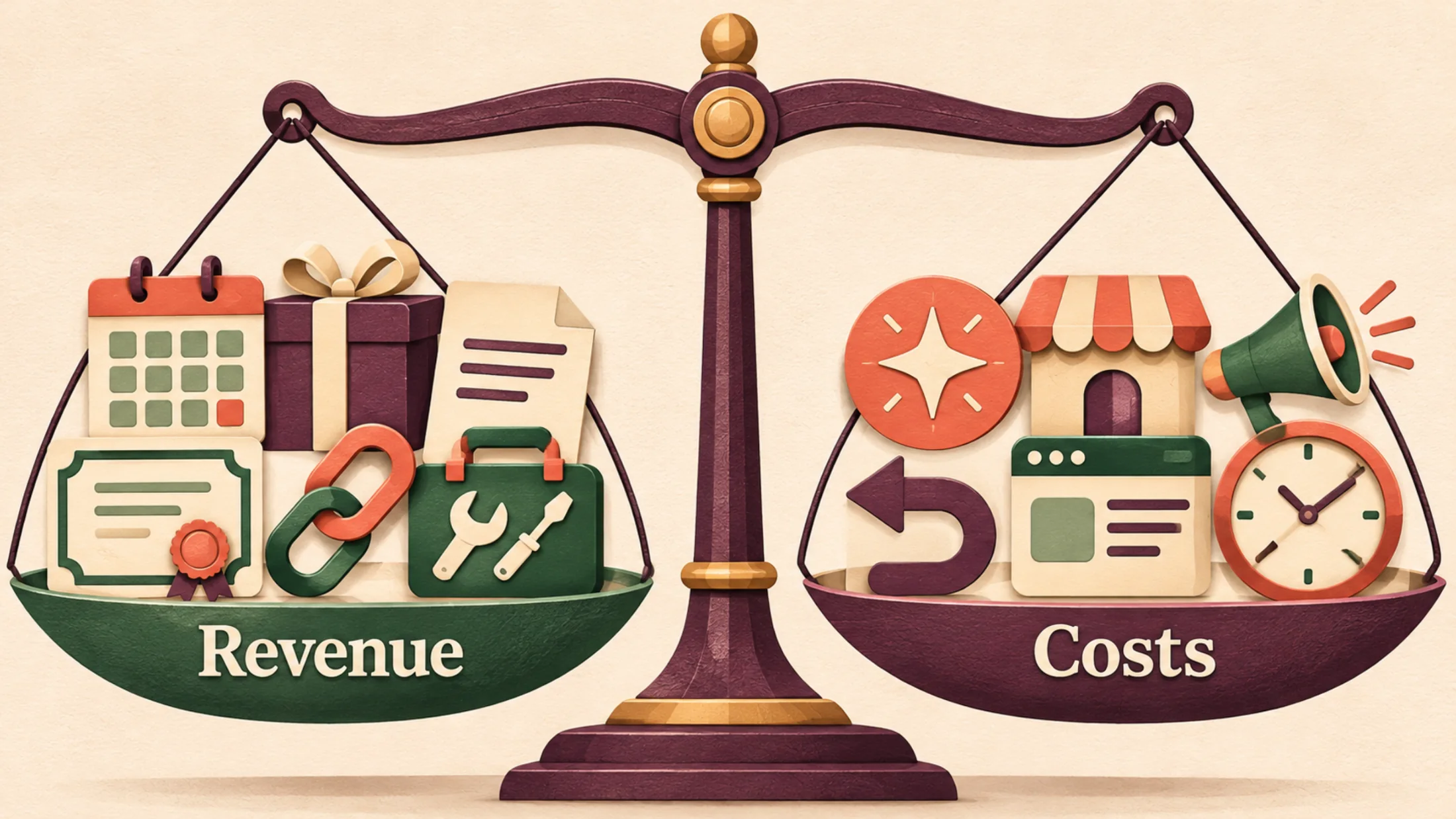
Scaling makes sense only when collected revenue covers both variable and fixed operating costs.
Measure what leads to retained, profitable demand
Review every release using the same set of metrics:
- Preview-to-profile rate
- Profile-to-paid conversion
- Average collected revenue per payer
- Renewal or retention rate
- Refund and chargeback rate
- Paid-set attachment rate
- Generation cost per publishable asset
- Production time per release
- Contribution margin
Compare releases by theme, offer, channel, and production cost. One unusually successful post provides useful evidence, but repeatability becomes clearer only across several comparable releases.
If the feed looks generic, trace the problem back to the production system:
- The persona’s appearance keeps changing: reduce the reference library and improve source quality.
- Every post uses a different art direction: narrow the palette, wardrobe, lighting, and settings.
- The audience definition is too broad: select one primary preference and build recurring series around it.
- Captions could belong to any account: define vocabulary, tone, and recurring narrative details.
- Too many themes appear at once: carry one theme across multiple formats before moving on.
- Paid bundles feel arbitrary: organize assets around a named release with a clear promise.
- Weak generations are being published: raise the selection threshold and remove inconsistent work.
A practical 30-day validation plan
Use 30 days as a structured decision period rather than an earnings deadline.
Days 1–7: Define one adult persona, target audience, visual system, boundaries, primary revenue model, test budget, and success threshold.
Days 8–14: Build a small approved source library, reusable prompts, shot list, folder structure, and initial collection. Select only the strongest, most consistent outputs.
Days 15–21: Publish permitted previews through one suitable channel. Offer one paid product or a clear way for the audience to express purchase intent. Maintain a simple interaction and posting rhythm.
Days 22–30: Record collected revenue, conversion, retention signals, refunds, generation costs, promotion, and labor. Compare the result with the threshold set before launch.
Then choose one of three paths:
- Retain: the concept shows sufficient demand and workable contribution economics.
- Revise: interest exists, but positioning, packaging, pricing, production, or channel fit needs improvement.
- Abandon: demand or economics remain weak after a controlled test, so another concept offers a better use of resources.
Start with one narrow persona concept, one coherent pilot collection, and one appropriate channel. Scale after conversion, retention, refunds, labor, and generation costs show that the full operating system can support a durable creator business.
Find an effect for your next idea.
Browse the actual previews, choose your settings, and review the credit quote before you create.
Explore effects →