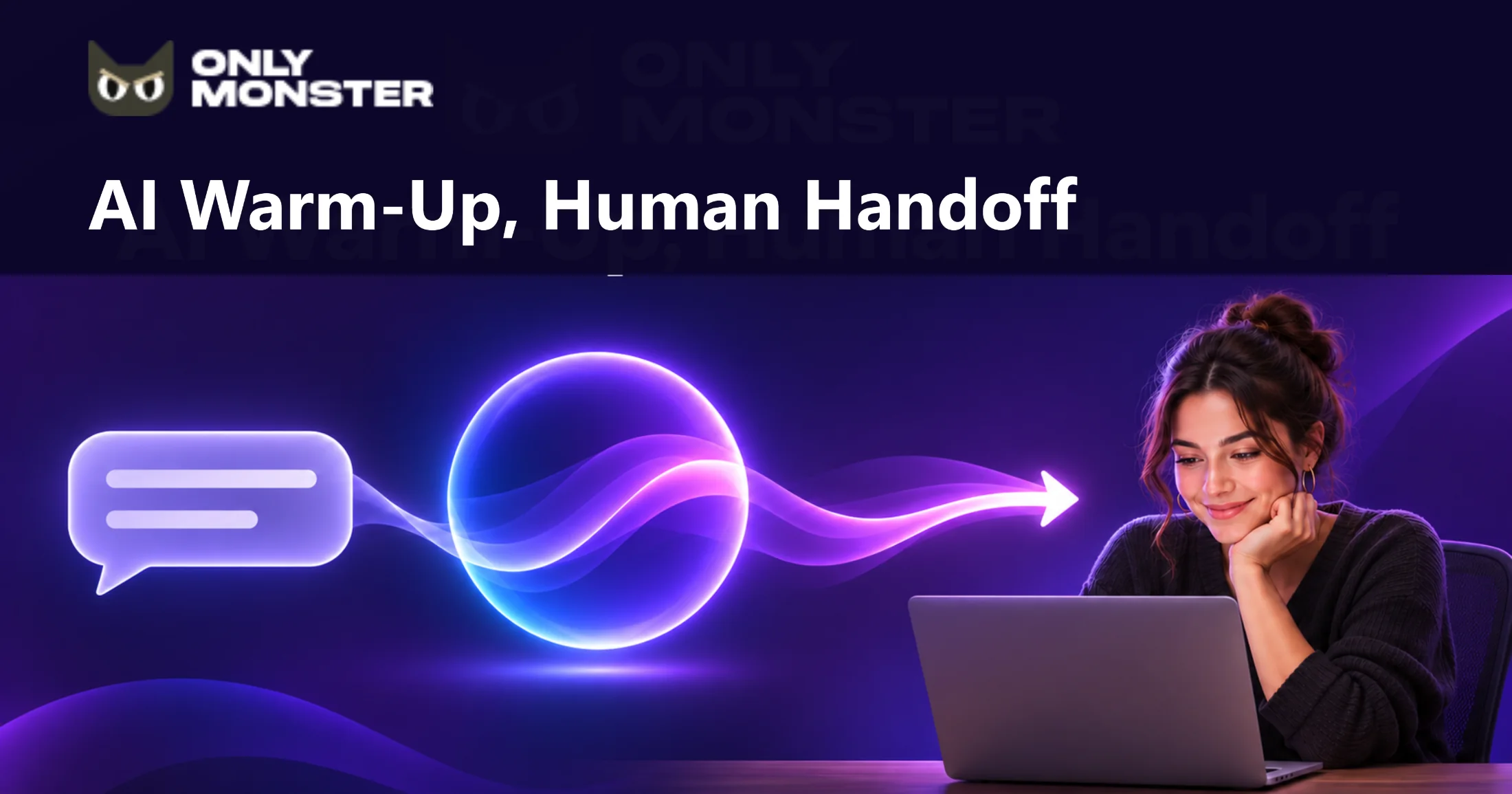
OnlyMonster Mimic AI is an AI-assisted fan-messaging feature that greets fans, maintains small talk, warms up conversations, and transfers chats to a human operator when judgment is needed. According to OnlyMonster’s official FAQ, a handoff may occur when a fan appears ready to pay, asks about content, raises a personal or sensitive issue, requests information missing from the creator’s Persona, or encounters a technical problem.
OnlyMonster calls Mimic AI a “wingman.” It handles suitable parts of an opening exchange while keeping the operator available to intervene at any time. The feature is designed as a conversational co-pilot, with human chatters retaining responsibility for commercial decisions, sensitive discussions, and situations the automation cannot resolve reliably.
How the Mimic AI workflow operates
The workflow begins before the first automated message. A creator or agency connects a supported account, builds an accurate Persona, defines a Tone of Voice, selects trigger events, and decides which situations require human attention.
Once Mimic AI is enabled, the process generally works as follows:
- A relevant event occurs, such as a fan coming online, subscribing, nearing expiration, or expiring.
- Mimic AI starts or continues an appropriate warm-up conversation.
- The Signal processor interprets the available conversational context.
- The Strategy processor selects a suitable next action.
- Automation continues while the exchange remains within configured facts and routine small talk.
- A handoff condition prompts the system to notify an operator.
- The operator reviews the conversation and takes control.
The available documentation does not explain the processors’ underlying models, architecture, thresholds, or accuracy. “Signal” and “Strategy” are best treated as functional product labels: Signal reads what appears to be happening in the conversation, while Strategy determines what the assistant should do next.
| Workflow stage | System role | Operator role | Main handoff risk |
|---|---|---|---|
| Account connection | Access supported messaging functions | Confirm the correct creator account and available integration depth | Incorrect account or incomplete platform support |
| Persona setup | Use supplied creator facts as context | Enter accurate facts and update them as circumstances change | Missing or outdated information |
| Tone of Voice setup | Apply stylistic guidance to messages | Define acceptable language, boundaries, and promises | Inconsistent messages or overcommitment |
| Trigger event | Start a configured automation | Choose which events should initiate outreach | Poor timing or unwanted contact |
| Conversation warm-up | Greet the fan and maintain routine small talk | Monitor coverage and operator availability | Conversation moves beyond routine chat |
| Signal and Strategy processing | Interpret context and choose the next action | Check whether the rules match actual operating needs | Ambiguous intent or an unsuitable next step |
| Escalation | Detect a stated handoff condition and notify an operator | Respond promptly and review the full context | Delayed notification or unclear ownership |
| Human takeover | Yield control of the conversation | Handle payment, content, sensitive, factual, or technical issues | Conflicting AI and human activity |
Automation and human work occur in sequence within the same conversation, so the transfer between them needs clear ownership and timing.
Persona and Tone of Voice control different things
The creator Persona supplies the facts and identity context Mimic AI uses when composing or evaluating a response. It might include approved biographical details, preferences, recurring topics, and boundaries. Its usefulness depends on the information entered. If a fan asks about something absent from the Persona, OnlyMonster lists that gap as a reason to bring in a human.
Tone of Voice governs how messages sound. It can guide warmth, brevity, playfulness, directness, vocabulary, and emoji use. A useful configuration also identifies what the assistant must never improvise, such as personal promises, content availability, delivery times, prices, or claims about the creator’s private life.
Teams should maintain these controls separately:
- Update Persona facts when the creator’s circumstances, offers, or boundaries change.
- Adjust Tone of Voice when the facts are correct but the messages sound wrong.
- Escalate instead of guessing when neither source provides a reliable answer.
This narrower role distinguishes Mimic AI from a licensed digital representation intended to become the main user experience. Mimisy’s guide to OhChat AI personas and licensed twins examines that neighboring model. Mimic AI focuses on assisting with fan conversations and routing judgment-heavy moments to an operator.
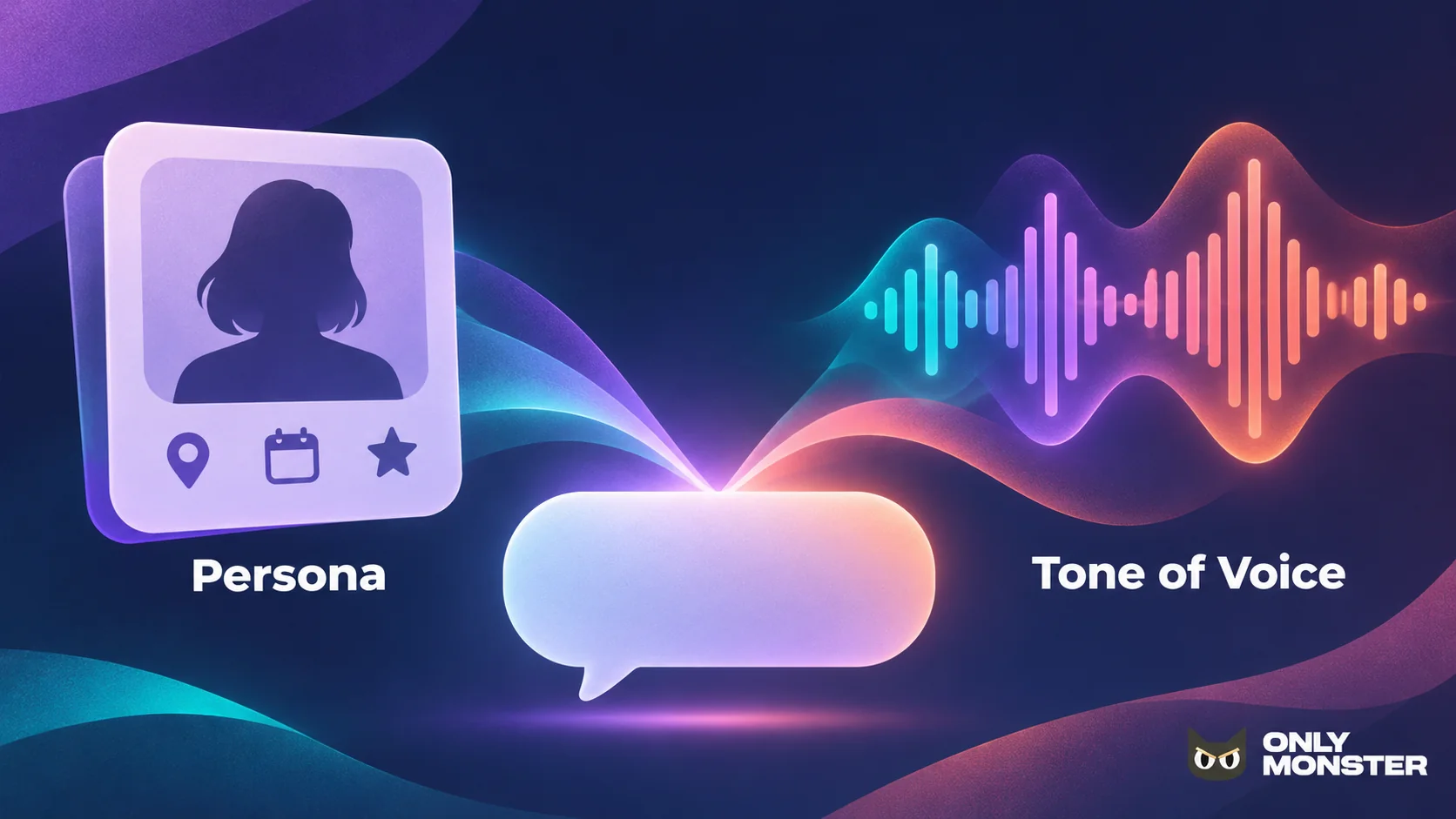
Persona supplies creator facts and identity context, while Tone of Voice controls how the resulting message sounds.
Trigger events and automated warm-up
OnlyMonster says Mimic AI may activate when a fan comes online, starts a subscription, nears expiration, or expires. These triggers allow proactive outreach without waiting for a new inbound question.
Each event needs a defined purpose and limits. A new subscriber might receive a welcome message and a simple opening question. A fan who comes online could receive a conversational prompt when that fits the account’s communication strategy. Approaching-expiration and expired-fan triggers can support re-engagement, but their messages should not imply an unconfigured or unapproved offer, price, or benefit.
Volume matters as much as wording. Enabling every trigger at once can produce repetitive outreach or generate more escalations than operators can handle. A smaller set of high-value triggers makes it easier to review conversations and confirm that takeover coverage works before expanding automation.
When Mimic AI should hand the chat to a human
OnlyMonster’s documented handoff conditions mark the practical limits of the automation.
Payment intent
When a fan appears ready to purchase or asks a payment-specific question, a human should confirm the offer, amount, availability, and next step. Purchase interest does not confirm a completed transaction, so the response should avoid turning that interest into an unsupported promise.
Payment terminology also differs between services. Mimisy’s credits and payments guide shows why balances, checkout charges, creator earnings, and claimed revenue outcomes need to be treated as separate concepts.
Content questions or requests
Routine greetings can remain automated. Requests for specific or custom content may involve scope, boundaries, availability, pricing, and delivery decisions, all of which require the creator or an authorized operator.
For example, “How is your evening?” fits ordinary small talk. “Can you create a custom set with these requirements by Friday?” should reach a human before anyone makes a commitment.
Personal or sensitive issues
A fan might disclose distress, conflict, health information, private details, or another issue requiring careful judgment. Warm language alone cannot resolve such a conversation. An operator needs the full context, clear responsibility for the response, and the ability to pause automation immediately.
Facts missing from the Persona
A fan might refer to a previous conversation or ask whether the creator will attend a particular event. If the answer is absent from the Persona and conversation context, Mimic AI should hand over the chat rather than invent an answer. The operator can respond, correct the record, and decide whether the new information belongs in the Persona.
Disputed facts need the same treatment. Human review prevents outdated setup data from producing repeated, confident errors.
Technical interruptions
Delivery failures, unavailable integrations, missing context, and other technical problems can disrupt the conversation. Before continuing manually, operators need to determine whether messages were sent, queued, duplicated, or never generated.
The OnlyMonster status page includes Mimic AI among its monitored services. The page can help users check current service conditions. Its monitored status does not establish uninterrupted availability, response quality, conversion lift, or revenue performance.
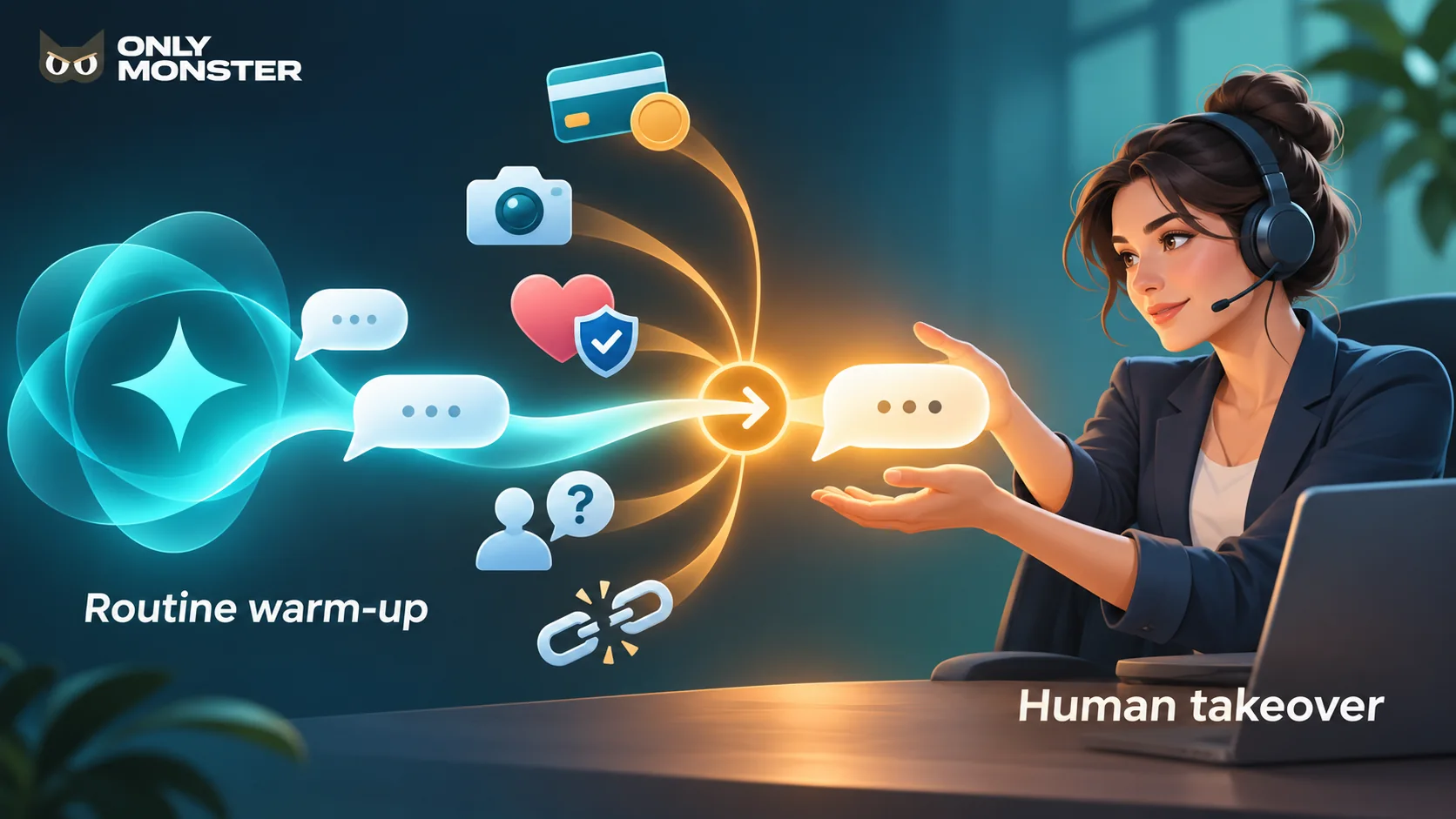
Routine warm-up can remain automated, while situations requiring judgment move the conversation to a human operator.
How the other OnlyMonster AI tools fit
Mimic AI belongs to a wider set of messaging, context, control, and audience-management tools. Their practical value comes from how well they support the handoff workflow.
AI Suggestions proposes responses while the operator reviews the conversation and decides what to send. It can reduce drafting time without removing human judgment.
AI Auto-Generate produces message text with less manual drafting. Teams still need rules defining when generated messages can be sent automatically, when approval is mandatory, and which subjects are excluded from unsupervised replies.
Fan Persona preserves useful context about an individual fan. It is separate from the creator Persona: Fan Persona represents relevant fan context, while the creator Persona supplies approved information about the creator. Stored details can become inaccurate and should be updated when a fan corrects or changes something.
AI Translator supports multilingual conversations, though translation does not eliminate escalation needs. Payment terms, nuanced requests, ambiguity, and sensitive discussions may require a fluent operator or another review step.
Message Guard provides a review or control layer. The available material does not specify which messages it checks, whether checks happen before or after sending, or which rules administrators can configure. Users should confirm those details in the current interface or documentation.
Dynamic Fan Lists, Buying Power, and win-back automation can influence which fans receive attention and when. These are segmentation and re-engagement inputs. A Buying Power signal does not prove that a fan will buy, and a win-back sequence cannot guarantee a renewal or recovered revenue.
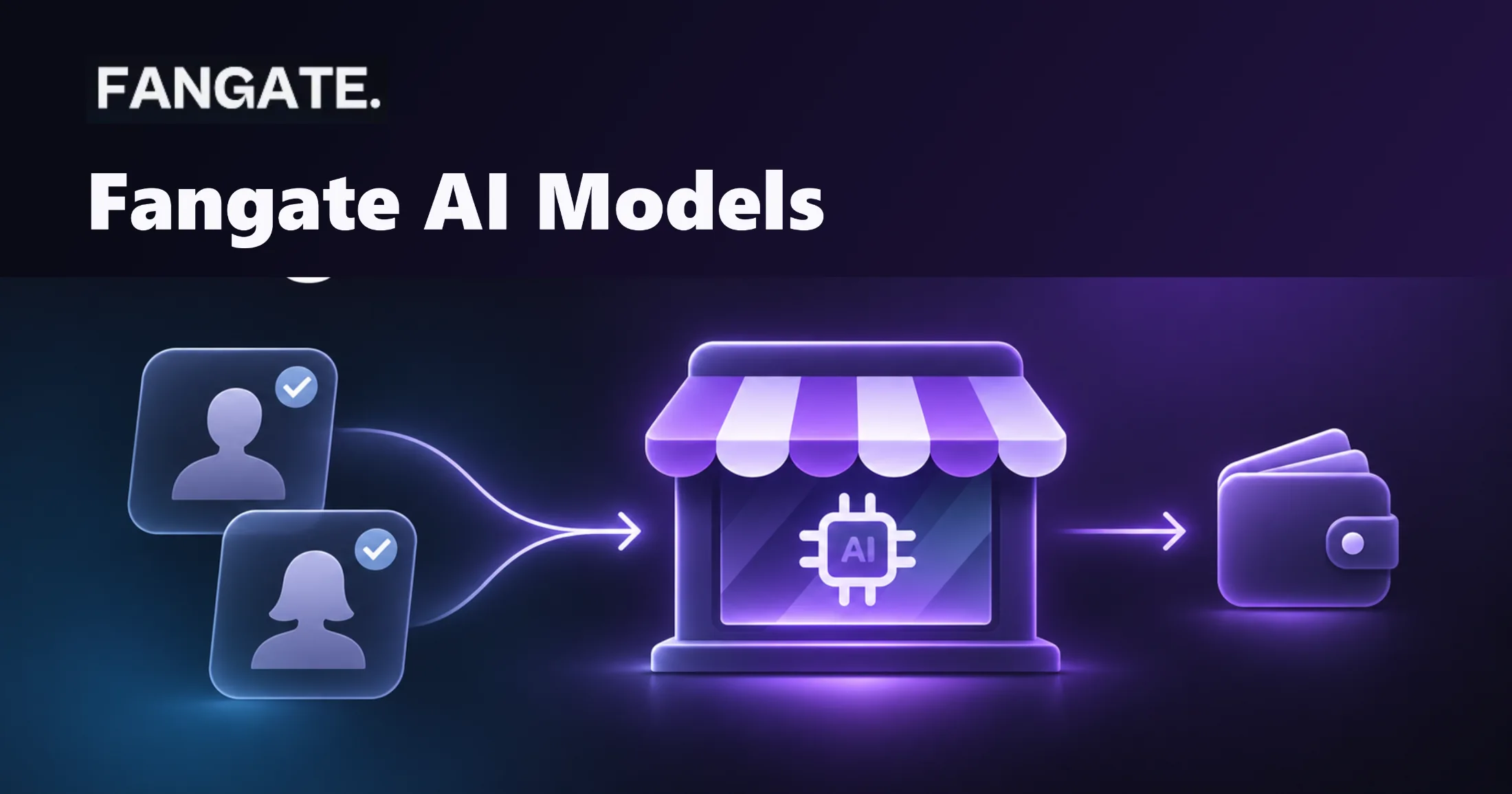
These tools also differ from those used to operate a fictional AI creator account. Mimisy’s explainer on Fangate AI models covers a separate model involving profile control, labeling, products, sales, and payouts. Mimic AI primarily provides messaging assistance for connected creator accounts.
Platform integration depth matters
OnlyMonster supports several creator platforms, but its FAQ identifies OnlyFans as having the deepest integration. Support depth varies on other platforms. Before designing a workflow, verify which triggers, messaging actions, fan data, alerts, lists, and takeover controls are available for the specific platform and account type.
An available integration does not establish that every automation pattern is permitted by the connected platform. Creator programs and operating rules remain platform-specific, as Mimisy’s guide to Pornhub’s creator and SFW rules illustrates in another setting. Check the current rules for each service rather than carrying assumptions over from OnlyFans or OnlyMonster’s general feature descriptions.
OnlyMonster’s FAQ is the primary source for the capabilities and triggers described here. It records how the company says the product is designed to work; it does not independently demonstrate message accuracy, sales performance, response quality, or conversion gains. Current contractual and data-handling details are available in the OnlyMonster terms and privacy policy.
Is Mimic AI a better fit for solo creators or agencies?
The better fit depends on whether dependable human coverage exists behind the automation.
A solo creator may benefit when repetitive greetings and routine small talk take time away from content work or higher-value conversations. Mimic AI is more suitable when the creator can keep the Persona accurate, review messages regularly, and take over promptly when payment intent or a sensitive request appears. It becomes less useful when automation stays active for long periods without anyone available to handle escalations.
An agency can use it to standardize account setup, coordinate operator notifications, and route chats to available staff. That scale introduces more operational complexity. Agencies need account-specific Personas, creator-approved tone boundaries, permission levels, escalation ownership, review procedures, and attribution that identifies whether AI or a particular operator performed an action.
For both setups, message volume is only part of the calculation. The deciding question is whether the creator or team can reliably recognize, assign, review, and resolve the conversations Mimic AI should not finish.
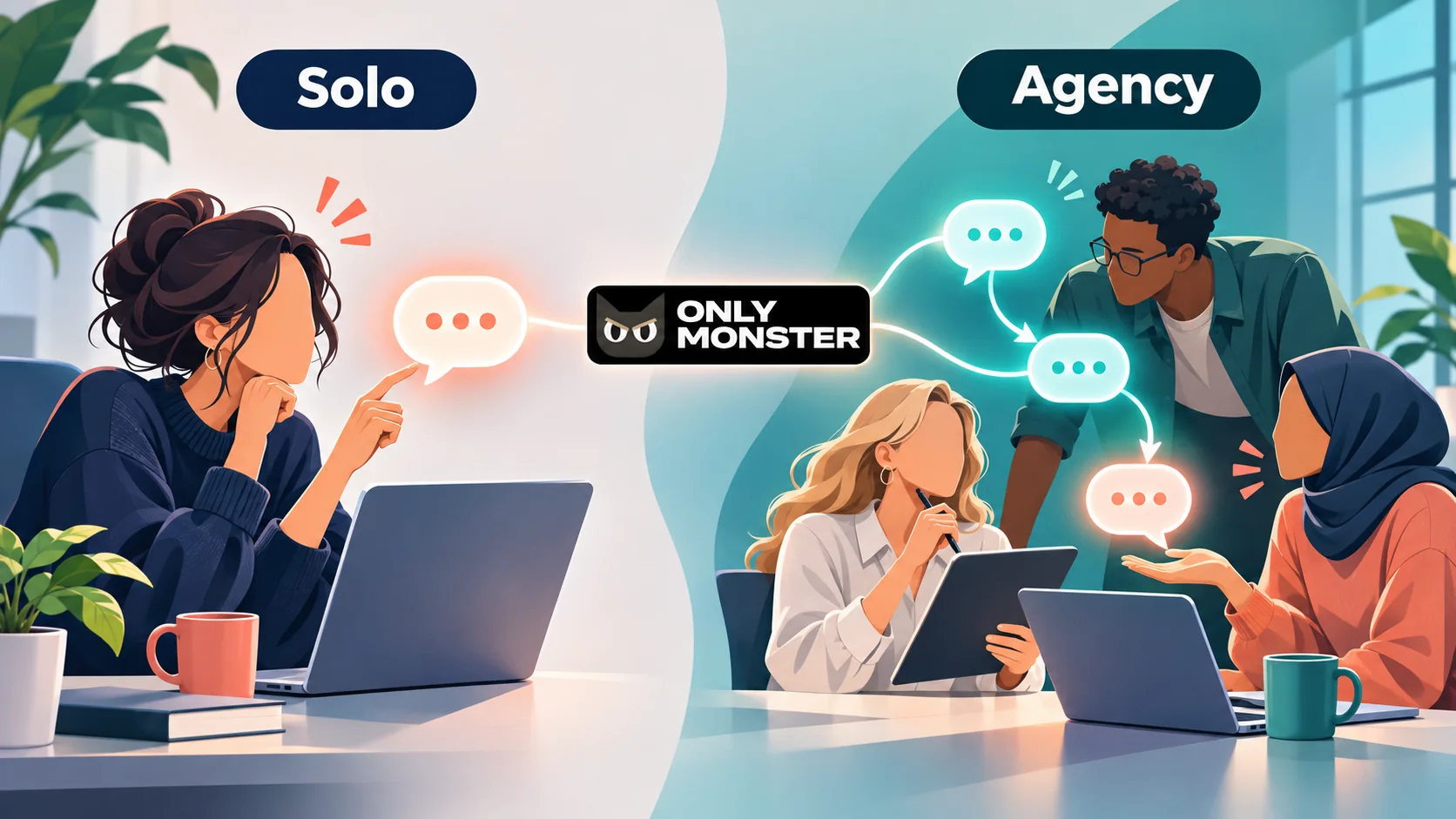
Solo use depends on personal takeover availability, while agency use depends on coordinated ownership and escalation coverage.
Onboarding checklist
Before enabling Mimic AI for live fan conversations:
- Confirm the supported features and integration depth for the intended platform.
- Connect the correct creator account and verify the available access.
- Record accurate, approved creator facts in the Persona.
- Define Tone of Voice rules, boundaries, and prohibited promises.
- Select trigger events deliberately instead of enabling everything at once.
- Require handoff for payments, content requests, sensitive matters, unknown facts, and technical issues.
- Configure operator notifications, access levels, and sending permissions.
- Test greetings, routine small talk, escalation, pausing, and takeover with non-sensitive scenarios.
- Assign a primary owner and backup for every escalation period.
- Check whether message history distinguishes automated actions from human ones.
- Review the connected platform’s current messaging rules.
- Schedule periodic reviews of Persona facts, triggers, permissions, and automation settings.
Questions to answer before enabling automation
Creators and agencies should get clear answers to these operational questions:
- Is automated assistance disclosed where appropriate, and how is the disclosure presented?
- What account, fan, and conversation data can OnlyMonster access?
- How long is the information retained, and which deletion controls are available?
- Which operators can view, draft, approve, or send messages?
- Can administrators distinguish Mimic AI actions from each operator’s actions?
- Can drafts or automated messages be reviewed before sending?
- What rules apply on each connected creator platform?
- How are sensitive topics and unknown facts routed and assigned?
- Which notification channels are available, and what happens if an operator does not respond?
- What happens to active conversations and queued messages during an interruption?
- Can a creator pause automation globally or for one fan?
- How quickly can a human take control, and how does the system prevent overlapping activity?
Mimisy’s Trust page offers a useful framework for evaluating permissions, private data, user control, and transparent product claims. It is not an independent audit of OnlyMonster, though the same questions are relevant when connecting a service to creator accounts and private conversations.
The practical verdict
OnlyMonster Mimic AI provides automated conversation warm-up and routing. It can cover greetings and suitable small talk, interpret conversational signals, choose a next step, and alert a human when an exchange reaches a commercial, factual, sensitive, or technical boundary.
Its usefulness depends on an accurate creator Persona, clear Tone of Voice rules, carefully selected triggers, sufficient platform integration, prompt operator coverage, and dependable escalation. Solo creators need a workable takeover routine. Agencies need the same routine along with consistent permissions, attribution, and account-specific controls.
OnlyMonster’s “wingman” description captures the intended role: Mimic AI helps manage the early conversation and directs the operator to moments that require human judgment. It is not positioned as a completely autonomous replacement for that operator.
Find an effect for your next idea.
Browse the actual previews, choose your settings, and review the credit quote before you create.
Explore effects →